Context
Story estimation is often criticized because estimates are not exact. That criticism is fair, but it misses the main point.
In an agile team, estimation is not a prediction exercise. It is a short discussion that helps the team understand the work before committing to it.
The estimate is useful, but the shared understanding is more important.
Before the Sprint: Build Shared Understanding
The most useful estimation question is not:
How many points is this story?
It is:
Do we understand what needs to be delivered?
When estimates differ, the team has found a signal. The story may be unclear, too large, technically risky, or dependent on something outside the team.
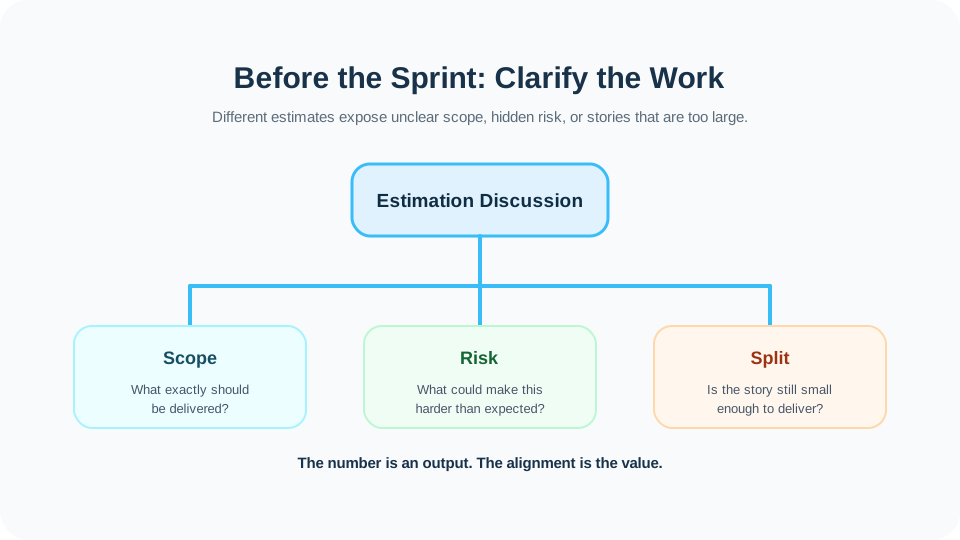
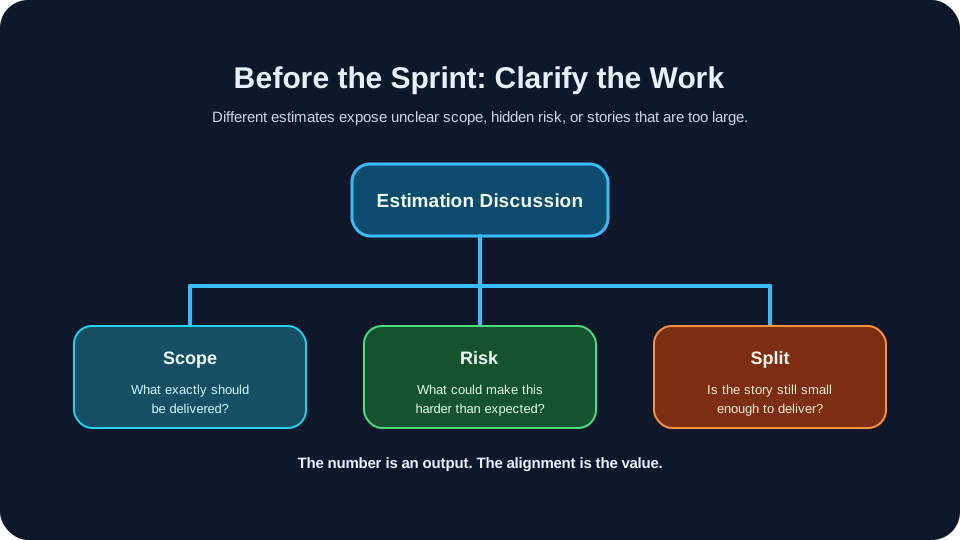
For example, a story like “Add export feature” can hide several decisions:
- Should the export be PDF, CSV, or both?
- Should it run synchronously or asynchronously?
- Is there a maximum file size?
- Who has permission to export?
- Do we need audit logs?
- What happens if the export fails?
- Is there a performance risk?
Without estimation, these questions often appear during development or testing. With estimation, the team handles them earlier, when changes are cheaper.
This discussion is stronger when it includes the whole team, not only the developer assigned to the story.
Useful estimation includes several perspectives:
- Product owner
- Developers
- QA or testers
- Tech lead
- Developers who may not be assigned to the story
Each role sees different risks. The product owner clarifies expectations. QA identifies edge cases. Developers detect technical complexity. Someone outside the implementation can challenge assumptions because they are less attached to the first solution.
During and After the Sprint: Adapt and Learn
An estimate gives the team a reference point during the sprint.
It is not a contract. It is a visibility tool.
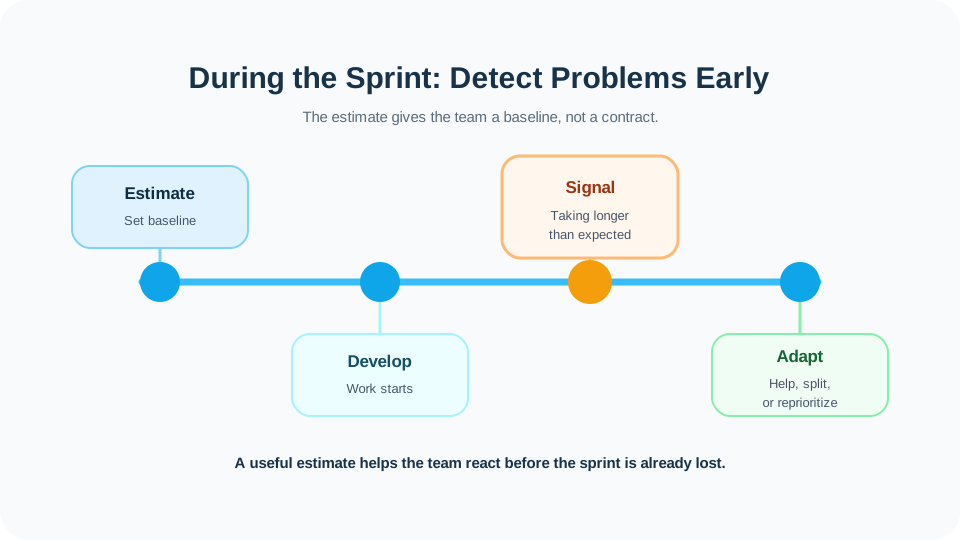
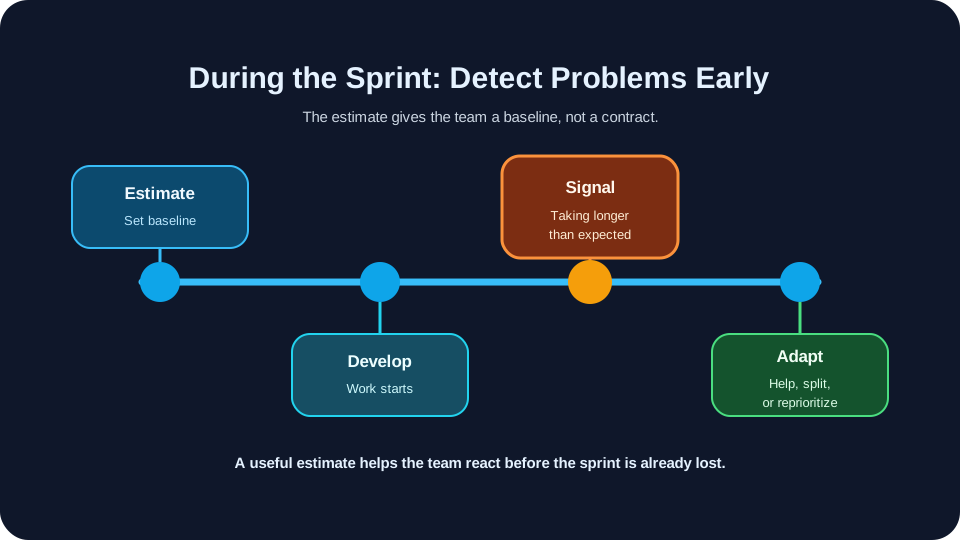
If a story estimated as small takes much longer than expected, the team can react before the sprint is already lost:
- Is there a blocker?
- Was the scope misunderstood?
- Did we discover hidden complexity?
- Does the developer need help?
- Should we split the story?
- Should we re-prioritize something?
The goal is not to blame the developer. The goal is to make delivery visible enough to adapt.
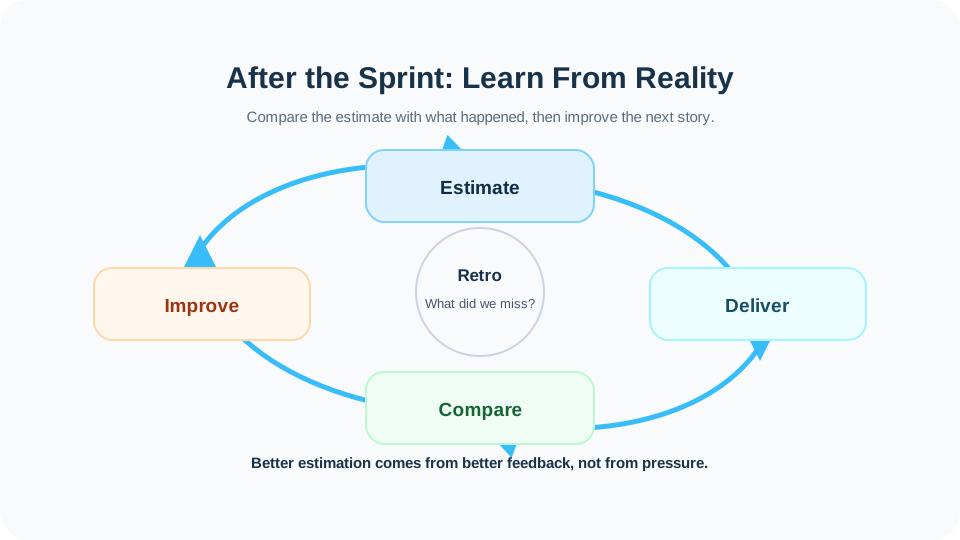
After delivery, estimates can improve the retrospective. The team can compare:
- What we estimated
- What really happened
- What surprised us
- What we should improve next time
This often reveals useful patterns:
- Stories are too large.
- Requirements are unclear.
- Technical debt is underestimated.
- QA is involved too late.
- External dependencies are discovered too late.
Over time, this helps the team split work better, identify risks sooner, and plan with more realism.
Use Estimation for Learning
A common mistake is to treat estimation as a precise commitment.
Do not use estimates to ask:
You said 3 points. Why is it not finished?
Use them to ask:
We estimated this as 3 points, but it became much bigger. What did we miss?
The first question creates pressure. The second creates learning.
These habits reduce the value of estimation:
- Estimation is done by one person only.
- Only the assigned developer estimates.
- The team gives numbers without discussing why.
- Estimates are used to pressure people.
- Large stories are accepted without challenge.
- The team never compares estimates with real delivery.
When these patterns appear, the problem is not estimation itself. The problem is how the team uses it.
Conclusion
Story estimation should stay lightweight. Before the sprint, it helps the team clarify scope, expose risk, and split work when needed.
During the sprint, it gives the team a baseline to detect problems early and adapt. After the sprint, it gives retrospectives concrete material to improve planning and delivery.
A team that estimates well is not a team that predicts everything perfectly. It is a team that discusses complexity early and learns from what actually happens.